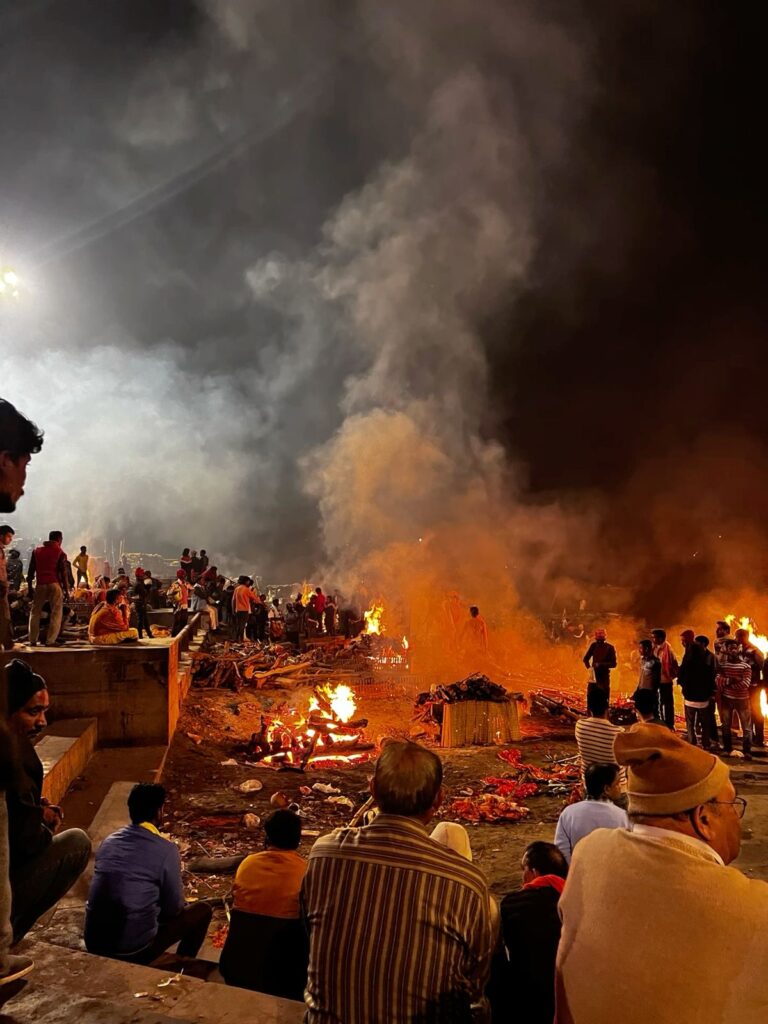
Manikarnika Ghat, one of India’s most sacred and ancient cremation grounds, is set to undergo a major redevelopment in Kashi (Varanasi). Known as the Moksha Dwar—the gateway to liberation—this historic ghat holds immense spiritual significance in Hindu tradition, where it is believed that cremation grants freedom from the cycle of rebirth.
According to reports, the redevelopment work at Manikarnika Ghat is expected to continue for the next 12 months. Authorities aim to preserve the ghat’s centuries-old religious essence while upgrading safety measures, infrastructure, and facilities for pilgrims, priests, and workers. The project is estimated to cost around ₹18 crore and focuses on balancing tradition with modern planning.
Manikarnika Ghat is unique as the funeral pyres here are said to burn continuously, symbolizing the eternal truth of life and death. Over time, heavy footfall, aging structures, and safety concerns made redevelopment necessary. The planned reconstruction includes improved pathways, safer platforms, better drainage systems, and structural strengthening, without disturbing ongoing rituals.
Officials have clarified that religious practices will continue uninterrupted during the redevelopment process. Special care is being taken to ensure that the sanctity of the site remains intact while making the area safer and more accessible. This initiative is also expected to enhance the overall experience for devotees and tourists visiting Kashi.
The redevelopment of Manikarnika Ghat marks a significant moment where ancient faith meets contemporary urban planning. While some view it as the end of an era, others see it as a step toward preserving this sacred site for future generations. Even through transformation, the spiritual soul of Sanatan tradition remains eternal.